




Apple Watch Ultra 4 for triathlon: Does it have enough battery for an IRONMAN?
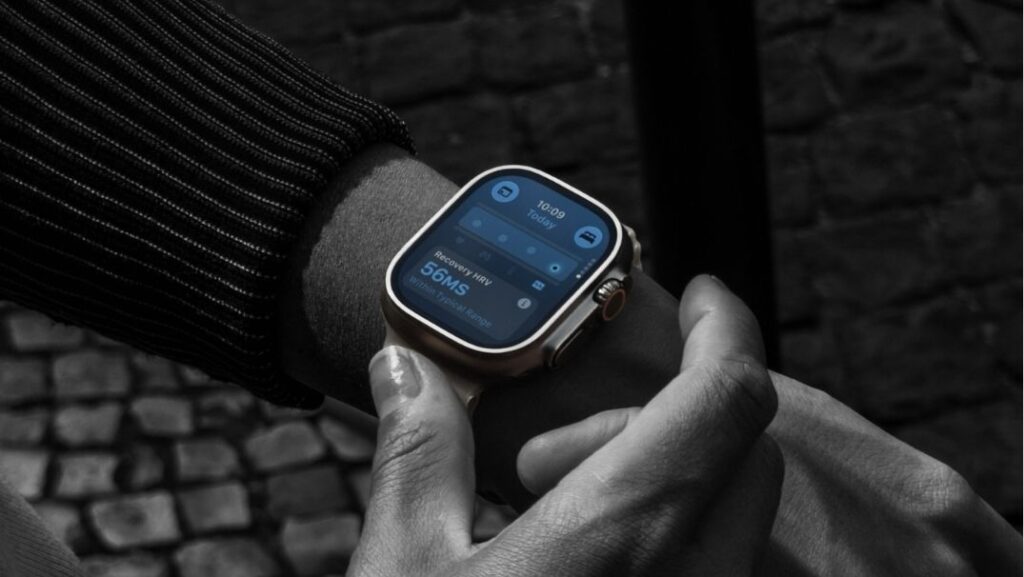
The Apple Watch Ultra 4 achieves up to 25 hours of outdoor workout tracking with GPS and heart rate enabled, a figure that changes its position for long-distance triathlon.
On paper, the battery life already falls well within the realm of an IRONMAN , although the conditions of the tests carried out by Apple require some nuances to be introduced.
Apple unveiled the new Apple Watch Ultra 4 on September 9 with improvements in battery life, fitness tracking, and recovery.
For a triathlete, one of the most interesting new features is precisely the battery. The watch achieves up to 18 hours of standard training tracking and increases that figure to 25 hours in Extended Training mode.

The question is clear: is battery life no longer a reason to rule out an Apple Watch in an IRONMAN?
18, 25 and 45 hours: not all numbers mean the same thing
Apple announces several battery life figures for the Ultra 4, but they correspond to different usage scenarios.
| Mode | Autonomy announced | Use |
|---|---|---|
| Normal use | Up to 50 hours | Everyday use of the watch |
| Low power consumption | Up to 84 hours | General use reducing consumption |
| Standard training | Up to 18 hours | Outdoor sports tracking |
| Prolonged Training | Up to 25 hours | GPS and heart rate activated |
| Maximum Prolonged Training | Up to 45 hours | Running, walking and hiking |
The 25-hour figure is the most impressive for long-distance use. Apple states that Long Workout mode maintains GPS and heart rate readings and increases battery life by 25% compared to the previous generation.
See Apple Watch Ultra 4 on Amazon
However, when training is prolonged, low power mode comes into play and some metrics become unavailable.
The 45-hour mode introduces even more compromises. It's specifically designed for running, walking, and hiking, keeps GPS location records every second, but disables alerts and intervals and omits certain metrics.
Therefore, we should not interpret those 45 hours as available autonomy to record a complete triathlon.
So, would it withstand an IRONMAN?
According to official figures, the Apple Watch Ultra 4 already has enough battery life on paper to tackle an IRONMAN distance triathlon.
In many full-distance IRONMAN races, the standard time to complete the entire course is 17 hours from the start of the swim , including transitions and rest stops. Specific cut-off times may vary between events, so always consult the athlete guide for each race.
The 18 hours advertised for standard tracking are already around that limit, although with too small a margin to take the theoretical autonomy as a guarantee.
With the 25 hours of Extended Training mode, the cushion is considerably larger.
However, there is an important limitation when interpreting these figures: Apple conducted its sports battery life tests using outdoor running sessions, without an iPhone and with the heart rate sensor activated.
Therefore, it is not a 25-hour test continuously using the multisport profile with swimming, cycling, running and transitions.
Actual battery life may also vary depending on configuration, connectivity, signal strength, sensors used, and other factors. Until a specific long-distance test is available, the 25-hour figure should be considered an official specification and not a battery life verified by TN during an IRONMAN.
The Ultra 4 does have specific features for triathlon
The battery would be less important if the watch wasn't prepared to correctly record all three disciplines.
The Apple Watch Ultra 4 incorporates multisport training and recognizes transitions between swimming, cycling, and running, recording the corresponding data for each segment.
In swimming, it can record distance, pace, heart rate, strokes and SWOLF, with profiles for pool and open water.
For cycling, it allows the use of power meters via Bluetooth and displays data such as power, cadence, speed, and power zones.
During the race, it offers personalized training, heart rate zones, power, and various running technique metrics.
It also uses dual-frequency GPS , a particularly interesting feature for improving positioning in areas where signal reception is more difficult.
Disposition: Apple is fully committed to recovery
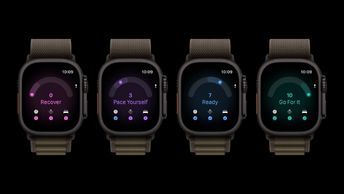
Another new feature in this generation is Disposition , a function that analyzes recent activity, exercise load, vital signs, and sleep quality to generate a daily score from 0 to 10.
The score can be updated throughout the day if new data appears, for example after a demanding workout, and shows what factors are influencing the result.
For endurance athletes, this is a significant step because it expands the role of the Apple Watch beyond recording workouts and brings its ecosystem closer to the joint analysis of load and recovery that already has an important role in specialized sports watches.
Garmin and COROS still have more autonomy margin
The fact that the Apple Watch Ultra 4 achieves a theoretical battery life sufficient for an IRONMAN does not mean that it has matched the battery life of specialized sports watches.
Models like the Garmin fēnix 9 and fēnix 9 Pro continue to highlight battery life as one of their main selling points for long distances and multi-day activities.
In the case of the COROS PACE 4 Pro , the brand announces up to 60 hours with all satellite systems activated and up to 40 hours using dual frequency.
At TN we have also tested the COROS PACE 4 in training and competition , a model geared towards triathletes and runners who prioritize autonomy, lightness and simplicity over more advanced smart features.
These figures should not be directly compared as if the Apple, Garmin, and COROS modes were identical. Each manufacturer uses its own configurations, sensors, GNSS systems, and methodologies.
What they do show is that specialized sports watches continue to offer a greater buffer of autonomy , something that can be relevant in ultra-distance events or for athletes who prefer to compete far beyond the theoretical battery limit.
Is the Apple Watch Ultra 4 a real alternative for triathlons?
The answer depends on what you ask the watch to do.
The Ultra 4 features multisport training, recognizes transitions, offers specific metrics for swimming, cycling and running, supports Bluetooth power meters and now achieves up to 25 hours of tracking with GPS and heart rate in Long Workout mode.
For a triathlete who already uses an iPhone and operates within the Apple ecosystem, battery life is no longer such a clear argument for ruling it out in long-distance situations.
Those who prioritize maximum battery life, ultra-distance, or an ecosystem specifically focused on sports analysis will still find relevant differences between Garmin, COROS, and other specialized manufacturers.
The significant change in the Apple Watch Ultra 4, therefore, isn't that it has surpassed those watches in battery life. It's that battery life alone no longer seems sufficient reason to rule it out of an IRONMAN.
The big test ahead will be to see how close those official 25 hours are to reality when the watch continuously records the 3,8 kilometers of swimming, 180 kilometers of cycling and 42,2 kilometers of running of a long-distance race.
Apple outlines the watch's features and battery life in its official press release announcing the Apple Watch Ultra 4.
This content has been created with the support of AI tools and reviewed by the Triathlon News editorial team.
