Volcano Triathlon 2026
Triathlon training

4 race training for sprint distance triathlon

Get out of the routine of your workouts with these 4 training proposals
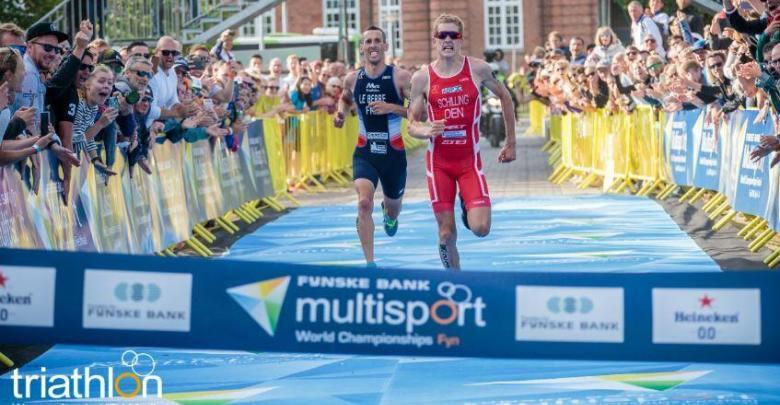
Improving your 5km run time in a sprint triathlon involves combining pace changes, short intervals, ladder training, and longer runs within a progressive plan.


In sprint distances, the run is often far more decisive than it seems. You arrive with accumulated fatigue from the swim and bike, so simply running fast isn't enough: you have to be able to maintain your pace when your legs are already tired.

To prepare for that final segment, these four types of training They can help you improve your 5K pace, gain speed change ability, and build a stronger aerobic base.

1. Changes of pace to learn to run hard and recover

The rhythm changes They are a good tool to get used to alternating intensities, something very useful in competition when you have to respond to an attack, overtake or stabilize the effort again after a climb or a technical turn.

After a good warm-up, the main part can move on to 5 or 6 kilometers alternating between easy and challenging sections. You can do it by time or by distance, whichever is more convenient for you.

Session examples:

  • 5 km alternating 500 m at 60% of maximum heart rate to 500 m at 75% of maximum heart rate.
  • 6 km with this sequence: 500 m at 50% HR max + 1 km at 70% + 500 m at 50% + 1,5 km at 70% + 500 m at 50% + 2 km at 70%.

2. Short series to gain speed and responsiveness

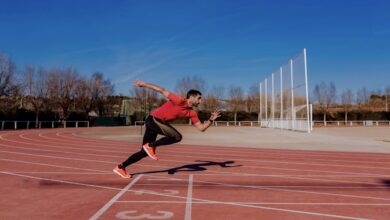
The short sets of 200 to 400 meters They help improve acceleration and the ability to move at higher speeds than those required for competition. They are especially useful for developing running economy and having more resources available in crucial moments.

Rest should be related to the intensity of the effort. The more demanding the pace, the more important it is to respect recovery to maintain the quality of the training.

You can expand on this work with specific sessions of short or long series, according to your profile and your fitness level.

Session examples:

  • 20×200 m / 30 seconds at a pace slightly faster than your target 5K pace.
  • 10 x 200 m / 1 minute at a pace between 30 seconds and 1 minute faster than your 5K pace.

3. Ladders and pyramids to accumulate quality

The workouts in ladder or pyramid They allow you to complete a significant volume of intense work with short breaks between sets. This means you can run faster than in a continuous 5K, while maintaining a total workload that's very useful for this type of goal.

They're also interesting because they break the monotony and force you to manage different rhythms within the same session. You can complement this type of work with others. speed training in running.

Session examples:

  • 6 km staircase: 10×200 m / 30” + 5×400 m / 1' + 2×1000 m / 1'30”.
  • 5 km pyramid: 5×200 m / 45” + 2×500 m / 1'30” + 1000 m / 2' + 2×500 m / 1'30” + 5×200 m / 45”.

4. Longer rides to build aerobic base

Even if the competitive goal is to run 5 kilometers, longer shoots They remain important. This work improves aerobic endurance and helps to better sustain the effort when the body is already fatigued from the previous segments.

It's not about always running fast, but about building a solid foundation that allows you to better assimilate intense training and compete more consistently. In this type of session, the work usually revolves around... 60-70% of maximum heart rate.

Session examples:

  • 1 hour race maintaining the intensity around the 60% of maximum heart rate.
  • 8 km at 70% of maximum heart rate.

The key is not just to train more, but to do it with progression.

To truly improve in the 5K of a sprint triathlon, the important thing isn't stringing together uncontrolled, hard sessions. Improvement comes when training is... progressive in intensity and volumeIt is well integrated into the week and respects recovery.

If you also have the supervision of a coach, it will be easier to adjust workloads, avoid mistakes, and turn that work into a real improvement in competition.

Training should be progressive in intensity and volume. Under the supervision of a professional, improvements will be more controlled and sustainable.

Laura García Cervantes
PhD in Physical Activity and Sports Sciences
Sports Director of the Tres Cantos Trikathlon Club
Triathlon and Swimming Senior Trainer
Specialist coach in Paratriathlon

Drafting

Triathlon News Editorial: We are the award-winning team in 2019 awarded by the TRIATLOC and Best Triathlon Website in SpainMade up of communicators and triathletes passionate about this sport, we have more than 14 years of experienceWe are passionate about covering triathlon with rigor, approachability and timelinessoffering verified information that reflects the emotion and dedication that define this discipline.
Button back to top