How to take the Olympic Triathlon step at the middle distance?
Have made an appropriate competitive progression before taking such an important step
Our collaborator Personal Running He then tells us a series of tips related to those aspects that we consider essential when going from the Olympic distance to the medium or long distance:
EXPERIENCE OR BAGAGE IN COMPETITION:
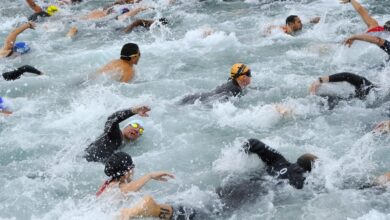
Before taking such an important step it is essential to have made a Proper competitive progression, that is, having previously correctly given the corresponding previous steps. To have debuted in sprint distance and to have played several triathlons of this type (750-20-5) and after having finished the enough Olympic triathlons (1500-40-10) to be sure that you master the distance both physically and mentally.
Perhaps a possible example of an appropriate progression could be to prepare sprint triathlons during a season and if all goes well to conclude with an Olympian. In the following season they could prepare two or three Olympic triathlons throughout the season and in the third year, take the jump to the middle distance (1900-90-21), including in its preparation for example some half marathon.
If we were already thinking about more Ironman-type distance tests (3800-180-42), the ideal would be to continue this progression and stay a couple of more seasons by prefixing target a pair of Ironman Media and if everything has gone well, from there, the preparation for the Ironman including a marathon within its preparation.
MATERIAL:
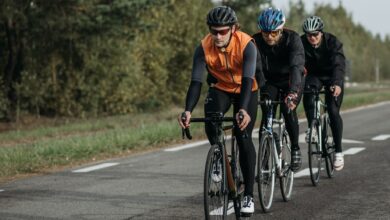
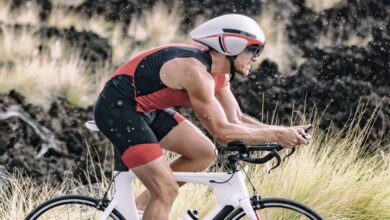
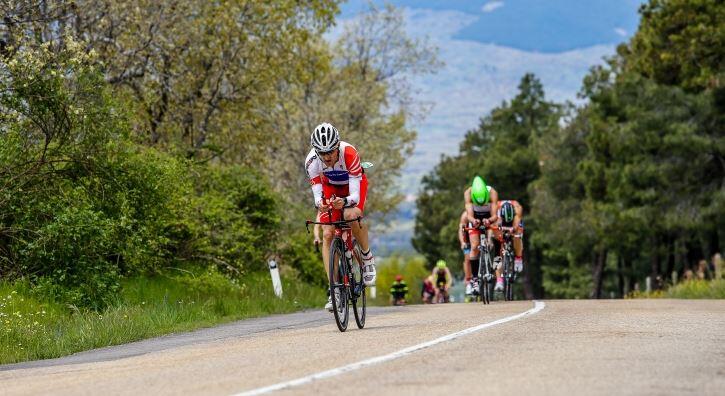
Practically in terms of material there would be hardly changes. What we use in short distance tests could be worth a priori for medium or long distance tests. Bearing in mind that the Olympic distance is usually with drafting, the bicycle would perhaps be the main change if we seek to obtain a better performance in medium and long distance tests. In this case, the "goat" or time trial bicycles would replace the conventional road bike, which would provide us with greater comfort, and at the same time, we would make our kms on it more effective and less harmful.
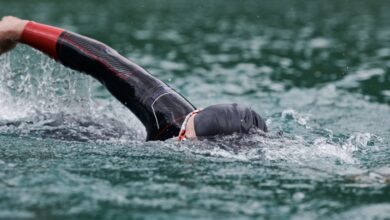
Maybe other aspects to take into account in terms of material would be the clothing or our competition clothing. The classic mono or integral that we usually wear in olympic distance can become annoying or uncomfortable in tests of greater duration, being more used the two pieces (top and short).
And finally, we could also mention all those accessories that we would not use in tests of shorter duration such as special aero drums for time trial bikes or belts adapted to carry canteens in the running race, all aimed at being able to self-supply better and more comfortably during such a prolonged period of exercise.
FEEDING:
The issue of food and supplementation represents a essential aspect within the preparation of races of greater distance. As we spend more time in competition, we must take care, train and be very attached to the issue of providing the body with all the energy it needs, that we know it will be good and that it will not play tricks on us.
In olympic distance, with a good dinner the previous day rich in carbohydrates, a couple of drums with water and salts and a couple of gels was worth to complete the test without problems. If we talk about medium or long distance, the whole issue of supplementing in the race is complex.
For this, during our workouts we shouldsimulate and test those products that we consider that we will do well on race day, becoming a component as important or even more than the training content itself, since without fuel the machinery can not work, and the greater the distance, the more fuel it needs.
PHYSICAL TRAINING:
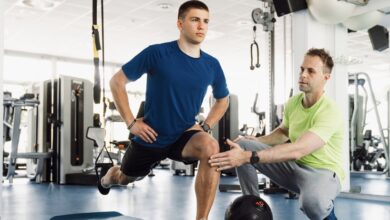
Before this step, we have to prepare the body in a different way than we did when training for an Olympic triathlon. The content of our training program would take a different form.
Apart of course that our loads and weekly training hours would increase depending on whether we prepare a Medium or an Ironman, the type of training would also suffer a series of modifications, all of them focused on empowering the organism to sustain prolonged, constant and sustained efforts prioritizing the aerobic component as we increase the distance we prepare and moving away more and more from that training where the anaerobic component stands out by which we tried to empower the organism so that both muscularly and physiologically we were able to endure a shorter time with a much higher heart rate and as well as being able to respond, endure, tolerate and clean up all that results from more explosive efforts such as changes in rhythm or accelerations typical of Olympic distance.
MENTAL PREPARATION:
The triathlete who decides to take the step towards the medium or long distance must be aware that although on paper and numbers is simply a multiplication by two, actually on the asphalt multiplication is much greater.
A Half Ironman on paper is twice an Olympic, but mentally and physically you realize that every kilometer that passes counts and weighs much more than the previous one, everything accumulates and adds up exponentially. The real relationship is not comparable. Being clear about the sacrifice and being aware and realistic of what we propose and what we always face while respecting the sport and distance is fundamental.
Without a head prepared not only to compete but also to invest hours and hours of training that many times will be in solitude, making this jump would not be possible.
Without a prepared head that is able to tell the body yes when it says no, making this jump would not be possible.
It is key to understand this and before taking the step to be convinced to 110% of all that entails, since the head the main engine of an athlete.
Further information: http://personalrunning.com/
Photo: PR, Gavá Triathlon
There are no previous results.